

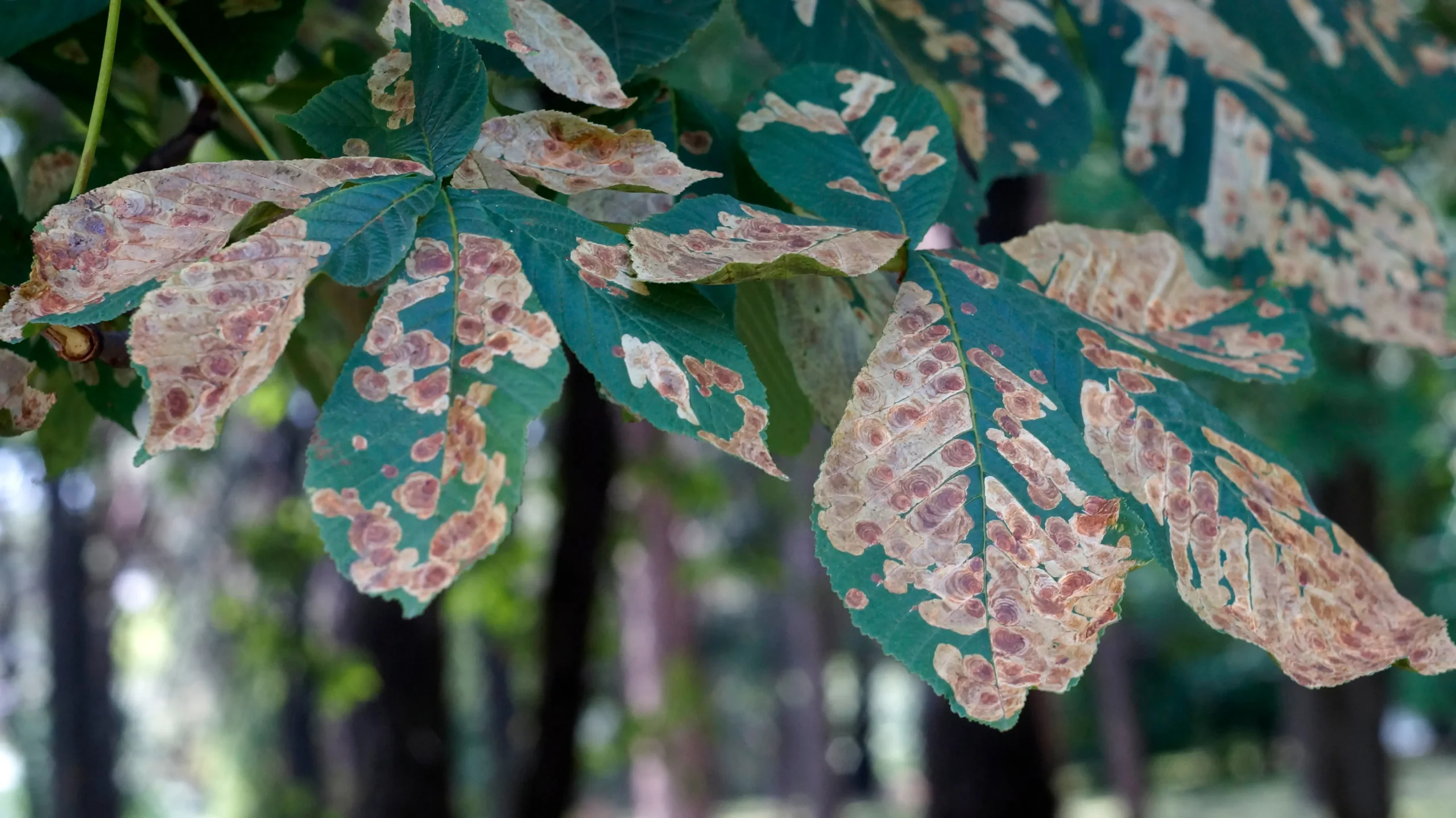
Trees add beauty, shade, and value to your property, but they can quickly decline when insects or disease take hold. Many common tree pests and common tree diseases found throughout the Bay Area attack stressed or weakened trees, causing leaf damage, branch dieback, and even tree loss if left untreated.
Knowing how to recognize the warning signs early can help protect your landscape. If you notice a sick or dying tree, professional diagnosis and treatment are often the best way to prevent further damage and stop problems from spreading to nearby trees.
Common Tree Pests and Diseases in the Bay Area
Several insects and diseases are frequently found on residential and commercial properties around San Jose, CA. Each affects trees differently, making proper identification an important first step before beginning treatment.
Watch for these common pests and diseases that can affect trees throughout the Bay Area:
Bark Beetles
Bark beetles are among the most destructive tree pests in Northern California. These tiny insects tunnel beneath the bark, disrupting the tree’s ability to move water and nutrients. Signs of an infestation include:
- Small holes in the bark
- Sawdust-like material around the trunk
- Peeling bark
- Yellowing or browning needles and leaves
- Branch dieback
Bark beetles are tiny, dark-colored beetles with hard, cylindrical bodies that allow them to tunnel beneath tree bark. They are especially attracted to drought-stressed, damaged, or weakened trees.
Invasive Shot Hole Borer (ISHB)
The Invasive Shot Hole Borer (ISHB) is a tiny beetle that poses a serious threat to many tree species throughout Northern California. As it bores into a tree, it introduces a fungus that blocks the tree’s ability to move water and nutrients, often leading to branch dieback and decline. Signs of an infestation include:
- Small, perfectly round entry holes in the bark
- Wet staining or dark discoloration around the holes
- White, powdery residue or sawdust near the trunk
- Branch dieback
- Wilting or thinning leaves
The Invasive Shot Hole Borer is a tiny brown-to-black beetle only a few millimeters long, making it difficult to spot. It attacks many hardwood trees, including sycamores, box elders, willows, and oaks.
Bronze Birch Borer
The Bronze Birch Borer is a wood-boring beetle that primarily attacks birch trees, especially those weakened by drought, heat, or other environmental stress. The larvae feed beneath the bark, disrupting the flow of water and nutrients throughout the tree. Common symptoms include:
- Yellowing or sparse leaves
- Dieback beginning in the upper canopy
- D-shaped exit holes in the bark
- Swollen or cracked bark
- Epicormic shoots (new sprouts) growing from the trunk
Bronze Birch Borers are small, metallic bronze-colored beetles that are attracted to stressed birch trees. Proper watering and routine maintenance are important for prevention.
Aphids
Aphids are small, soft-bodied insects that gather on new growth and feed on tree sap. While a light infestation may cause little harm, large populations can weaken trees over time. Common signs include:
- Curled or distorted leaves
- Sticky honeydew on leaves or sidewalks
- Black sooty mold on the honeydew
- Increased ant activity
Aphids are small, pear-shaped insects that come in a variety of colors, including green, black, and yellow. Healthy trees can often tolerate small aphid populations, but recurring infestations may require treatment.
Scale Insects
Scale insects attach themselves to branches and stems where they feed on plant fluids. Because they resemble small bumps on bark, they’re often overlooked until significant damage has occurred. Symptoms may include:
- Yellowing leaves
- Poor growth
- Branch dieback
- Sticky honeydew
- Premature leaf drop
Regular tree inspections can help identify scale problems early and allow for effective treatment before the damage becomes severe.
Powdery Mildew
Powdery mildew is one of the most recognizable common tree diseases affecting ornamental trees. It appears as a white or gray powdery coating on leaves and young shoots. Although it rarely kills mature trees, repeated infections can reduce vigor and affect overall appearance.
Anthracnose
Anthracnose is a fungal disease that commonly affects sycamores, oaks, maples, and other shade trees during cool, wet weather. Symptoms often include:
- Brown or black leaf spots
- Twisted or curled leaves
- Premature leaf drop
- Dead twigs and branch tips
Repeated infections can stress trees and make them more vulnerable to insect infestations.
How to Tell If You Have a Sick or Dying Tree
Many tree problems begin with subtle symptoms before becoming more severe. Identifying tree pests and diseases early gives your tree the best chance of recovery. Watch for warning signs such as:
- Dead or Dying Branches: Branches that fail to produce leaves or begin dying back may indicate disease, insect damage, or a tree under significant stress.
- Discolored or Early-Dropping Leaves: Leaves that turn yellow or brown prematurely or fall before the normal season may indicate declining tree health.
- Cracks or Splits in the Trunk: Deep cracks or splitting bark may result from disease, structural weakness, or environmental stress and should be inspected promptly.
- Small Holes in the Bark: Tiny holes in the trunk or branches can indicate the presence of wood-boring insects feeding beneath the bark.
- Mushrooms at the Base: Mushrooms or other fungal growth around the base of a tree may signal internal decay or root rot.
- Oozing Sap or Cankers: Areas where sap is leaking, or the bark appears sunken or damaged, may be symptoms of bacterial or fungal infections.
- Thin or Sparse Foliage: A thinning canopy or reduced leaf growth often suggests the tree is struggling with pests, disease, or poor growing conditions.
- Visible Insect Activity: Loose bark, sawdust, or insects crawling on or beneath the bark may point to an active pest infestation.
Not every symptom points to the same problem, which is why a professional inspection is often necessary.
Can You Treat Tree Pests and Diseases Yourself?
Some minor issues, such as pruning small infected branches or washing aphids from leaves with water, can sometimes help. However, many infestations and diseases require the experience and knowledge of tree care specialists to identify correctly and determine the best solution.
Misdiagnosing the problem or applying the wrong treatment may allow the issue to spread or create additional stress for the tree. A professional inspection can help identify the underlying cause and prevent further damage.
Professional arborists use proven methods for treating tree pests and diseases, including targeted insecticides, fungicides, trunk injections, soil treatments, and specialized pruning techniques designed to protect the long-term health of your trees.
How to Help Prevent Tree Problems
While no tree is completely immune to pests or disease, good maintenance greatly reduces the risk. Simple preventative measures include:
- Water trees properly during dry periods.
- Prune dead, damaged, or crossing branches.
- Avoid damaging trunks with lawn equipment.
- Improve soil health with proper mulching.
- Schedule routine tree inspections.
- Remove dead wood that can attract insects.
- Address signs of stress before they worsen.
Healthy trees are generally more resistant to insects and disease than trees already weakened by drought, poor soil, or physical damage.
Professional Tree Care for Sick and Dying Trees in the Bay Area
If you have a sick or dying tree, don’t wait until the damage becomes irreversible. Identifying tree pests and diseases early often allows us to save valuable trees while preventing problems from spreading throughout your landscape.
At Aly’s Tree Trimming & Yard Clean Up Up, we provide professional tree inspections, pruning, and treatment recommendations throughout San Jose, CA. Our team will identify the cause of your tree’s decline and recommend the right solution to restore its health.
Contact Aly’s Tree Trimming & Yard Clean Up today to learn more about professional solutions for sick, damaged, or declining trees.