
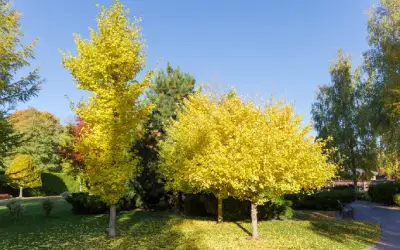
Choosing the right trees for your landscape is a significant decision, especially in a place as geographically diverse the San Jose area. When considering the most popular trees to plant, it is important to remember that the “best” tree isn’t a universal standard; rather, it is the tree that aligns perfectly with your specific vision for your property. You might be dreaming of a grand, sweeping canopy that anchors your home for generations, or perhaps you need a compact, colorful specimen to brighten a small patio.
Whether you are prioritizing summer shade, a harvest of homegrown fruit, or a hardy variety that won’t suffer as much during our region’s intense droughts, your landscaping goals dictate the selection.
This guide is designed to help you navigate the most popular trees in San Jose by categorizing them according to their strengths, ensuring you find the perfect match for your landscape. Without further ado, these are the best and most popular trees to grow in San Jose and the greater Bay Area.
Jump to a section:
- Best Native Trees
- Best Imported Trees
- Best Large Trees
- Best Small Trees
- Best Shade Trees
- Best Decorative Trees
- Best Fruit Trees
DON’T DILLY DALLY,
CALL ALY!
Reach out anytime, we’re here to help.

Don’t hesitate to reach out by sending a message using our form.
What Are the Best Native Trees to Grow in the San Jose Area?
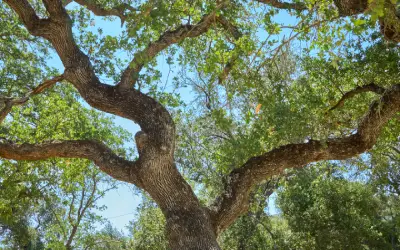
Native species are the champions of our local ecosystem. Having evolved alongside our specific soil types and weather patterns, these trees offer a sense of “place” that non-natives simply cannot match. They are the backbone of the local canopy, providing essential habitat for local wildlife while demanding very little from the homeowner once established.
Valley Oak (Quercus lobata)
The Valley Oak is a true monument of California’s heritage. If you have the space, this tree offers a majestic, twisted limb structure and deeply lobed leaves that create a classic silhouette against the foothills. It is the gold standard for a “legacy” tree in the South Bay.
- Sun Exposure: Full sun.
- Ideal Soil Type: Tolerates many soils, but prefers deep, loamy garden soils.
- Drought Tolerance: High (once established).
- Seasonality: Deciduous; sheds leaves in winter, revealing a dramatic skeletal frame.
- Where It Thrives: Large backyards or open acreage where its massive root system has room to spread.
- Where Not to Plant: Avoid tight spaces, near foundations, or directly under power lines.
- Maintenance Needs: Periodic structural pruning in its youth to ensure a strong frame; otherwise, it is very self-sufficient.
- Maintenance Rating: Low.
California Buckeye (Aesculus californica)
The Buckeye is a fascinating conversational piece for any garden. It is known for its stunning, upright silver-white flower spikes in the spring and its unique habit of going dormant in late summer to protect itself from the heat, revealing a beautiful, smooth silvery bark.
- Sun Exposure: Full sun to part shade.
- Ideal Soil Type: Adaptable; thrives in well-drained slopes.
- Drought Tolerance: Very high; it is a master of water conservation.
- Seasonality: Blooms in late spring; enters summer dormancy (drops leaves early).
- Where It Thrives: Hillsides or as a focal point in a native-only garden.
- Where Not to Plant: Near high-traffic walkways where falling “buckeye” seeds might be a tripping hazard.
- Maintenance Needs: Minimal; mostly clearing fallen seeds if desired.
- Maintenance Rating: Low.
Toyon (Heteromeles arbutifolia)
While often grown as a large shrub, the Toyon can be easily trained into a multi-trunked small tree. It is famous for its vibrant red berries that persist through the winter, earning it the nickname “California Holly.”
- Sun Exposure: Full sun to partial shade.
- Ideal Soil Type: Prefers well-drained soil but handles the local clay remarkably well.
- Drought Tolerance: High.
- Seasonality: White flowers in summer; bright red berries in winter.
- Where It Thrives: Perimeter screening or as a bird-friendly accent tree.
- Where Not to Plant: Areas with poor drainage or standing water.
- Maintenance Needs: Light pruning to maintain a tree-like shape and removal of spent flower clusters.
- Maintenance Rating: Low.
What Are the Best Imported Trees to Grow in the San Jose Area?
San Jose’s Mediterranean climate allows us to host “guests” from all over the world. Many trees from Australia, the Mediterranean Basin, and Asia feel right at home here, offering aesthetics and textures that complement our local architecture perfectly.
Olive Tree (Olea europaea)
The Olive tree brings an immediate sense of timeless, rustic elegance to a San Jose CA garden. Its silvery-green foliage and gnarled trunk look as though they were plucked straight from an Italian hillside, and it thrives in our dry, sunny summers.
- Sun Exposure: Full sun.
- Ideal Soil Type: Well-drained, even poor or rocky soils.
- Drought Tolerance: Very high.
- Seasonality: Evergreen; maintains its silvery shimmer year-round.
- Where It Thrives: Focal points in “dry” landscapes or near Mediterranean-style homes.
- Where Not to Plant: Near light-colored concrete (if choosing a fruiting variety, as falling olives can stain).
- Maintenance Needs: Thinning the inner canopy to allow light in; choosing a “fruitless” variety can reduce mess.
- Maintenance Rating: Medium.
Ginkgo Biloba (Ginkgo biloba)
Commonly called the Maidenhair tree, the Ginkgo is a “living fossil” with unique fan-shaped leaves. It is most prized for its spectacular autumn display, when the entire tree turns a uniform, brilliant gold before dropping its leaves all at once.
- Sun Exposure: Full sun.
- Ideal Soil Type: Deep, sandy, well-drained soil.
- Drought Tolerance: Medium.
- Seasonality: Deciduous; features a stunning yellow fall color.
- Where It Thrives: Street-side plantings or as a centerpiece in a lawn.
- Where Not to Plant: Avoid female varieties (which produce malodorous fruit); always plant “male” grafted cultivars.
- Maintenance Needs: Very little; it is exceptionally resistant to pests and urban pollution.
- Maintenance Rating: Low.
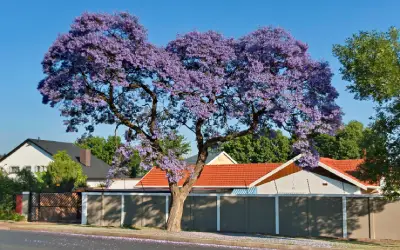
Jacaranda (Jacaranda mimosifolia)
If you want a tree that stops traffic, the Jacaranda is the one. In late spring and early summer, it becomes a literal cloud of purple-blue trumpet-shaped flowers. It adds a lush, tropical feel to any neighborhood.
- Sun Exposure: Full sun.
- Ideal Soil Type: Rich, well-drained soil.
- Drought Tolerance: Medium.
- Seasonality: Blooms in late spring/early summer; deciduous in late winter.
- Where It Thrives: South-facing spots that stay warm.
- Where Not to Plant: Directly over pools or parked cars, as the falling blossoms can be sticky.
- Maintenance Needs: Regular pruning to manage heavy limbs and cleaning up fallen blossoms.
- Maintenance Rating: High.
What Are the Best Large Trees for the San Jose Area?
When you have the space, a large tree provides the “ceiling” for your outdoor living room. These giants offer the most significant environmental benefits, including massive carbon sequestration and a dramatic increase in property value. Many of our native oaks, like the Valley Oak, are excellent candidates here, but there are others that offer different textures.
Coast Redwood (Sequoia sempervirens)
While they prefer the coastal fog, Redwoods can thrive in San Jose CA if given the right care. They offer unparalleled height and a deep, forest-like fragrance that can transform a backyard into a private sanctuary.
- Sun Exposure: Full sun to part shade.
- Ideal Soil Type: Moist, slightly acidic, well-drained soil.
- Drought Tolerance: Low to Medium; they require supplemental water in our valley.
- Seasonality: Evergreen; provides deep green color all year.
- Where It Thrives: In “groves” or along property lines for privacy.
- Where Not to Plant: Near sewers or water lines, as their roots are incredibly thirsty and vigorous.
- Maintenance Needs: Significant irrigation during dry spells and mulching to keep roots cool.
- Maintenance Rating: High.
Deodar Cedar (Cedrus deodara)
This is a grace-filled evergreen with drooping branches and soft, blue-green needles. It creates a massive, pyramidal shape that looks stunning during the holidays and provides a permanent windbreak.
- Sun Exposure: Full sun.
- Ideal Soil Type: Adaptable; does well in our local clay.
- Drought Tolerance: High (once established).
- Seasonality: Evergreen.
- Where It Thrives: Large corner lots where it has 40+ feet to spread its lower branches.
- Where Not to Plant: Small urban lots or near narrow driveways.
- Maintenance Needs: Occasional “dead-wooding” and space management.
- Maintenance Rating: Low.
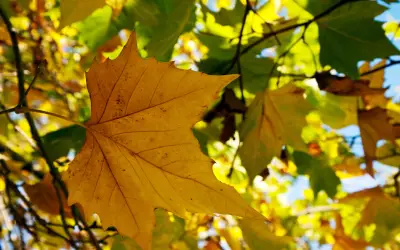
London Plane Tree (Platanus × acerifolia)
A common sight in downtown plazas, this tree is incredibly tough. It features beautiful exfoliating bark that peels away to reveal creamy, olive, and brown patches, and large, maple-like leaves that provide dense summer shade.
- Sun Exposure: Full sun.
- Ideal Soil Type: Very adaptable; handles compacted urban soils well.
- Drought Tolerance: Medium to High.
- Seasonality: Deciduous; sheds large leaves in the fall.
- Where It Thrives: Along driveways or as a dominant shade provider.
- Where Not to Plant: Near sensitive septic systems or very small gardens.
- Maintenance Needs: Managing the “leaf litter” in the fall and monitoring for powdery mildew.
- Maintenance Rating: Medium.
What Are the Best Small Trees for the San Jose Area?
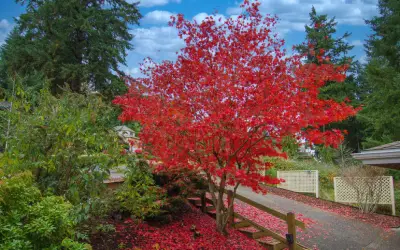
Not every yard has room for a giant, but every yard has room for a well-placed small tree. These beauties are perfect for framing a doorway, shading a window, or adding vertical interest to a flower bed.
Japanese Maple (Acer palmatum)
The Japanese Maple is the jewel of the small tree world. With hundreds of varieties offering colors from lime green to deep burgundy, and forms ranging from upright to weeping, there is one for every corner.
- Sun Exposure: Filtered sun or morning sun/afternoon shade (to prevent leaf scorch).
- Ideal Soil Type: Well-drained, slightly acidic soil.
- Drought Tolerance: Low; likes consistent moisture.
- Seasonality: Exceptional fall color before dropping leaves.
- Where It Thrives: Entryways, near patios, or in large containers.
- Where Not to Plant: Exposed, windy sites or in the direct blast of the 3:00 PM sun.
- Maintenance Needs: Delicate aesthetic pruning to highlight the branch structure.
- Maintenance Rating: Medium.
Eastern Redbud (Cercis canadensis)
Though not a California native, the Redbud is beloved here for its heart-shaped leaves and the way tiny, pea-like purple flowers emerge directly from the bark in early spring.
- Sun Exposure: Full sun to partial shade.
- Ideal Soil Type: Moist, well-drained soil.
- Drought Tolerance: Medium.
- Seasonality: Stunning spring bloom; yellow fall foliage.
- Where It Thrives: As an accent tree in a mixed border.
- Where Not to Plant: Extremely dry, unirrigated “wild” areas.
- Maintenance Needs: Pruning to remove any weak “V” crotches in the branches.
- Maintenance Rating: Medium.
Strawberry Tree (Arbutus unedo)
This is a versatile, hardy evergreen that stays small and manageable. It features attractive reddish bark, white bell-shaped flowers, and “strawberry-like” fruit that transitions from yellow to bright red.
- Sun Exposure: Full sun to part shade.
- Ideal Soil Type: Well-drained soil; very tolerant of different pH levels.
- Drought Tolerance: High.
- Seasonality: Evergreen; flowers and fruit often appear at the same time in autumn.
- Where It Thrives: Small courtyards or as a “soft” privacy screen.
- Where Not to Plant: Right against a house (allow for its rounded spread).
- Maintenance Needs: Minimal; mostly thinning if it gets too dense.
- Maintenance Rating: Low.
What Are the Best Shade Trees for the San Jose Area?
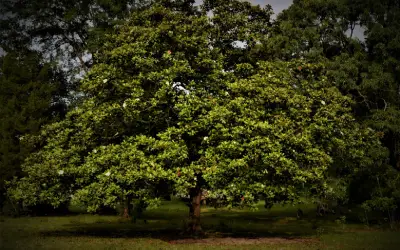
In the height of July, a good shade tree can lower the temperature of your home and yard by 10 to 15 degrees. These trees are selected for their broad, dense canopies that act as natural air conditioners.
Chinese Pistache (Pistacia chinensis)
This is widely considered one of the best street and shade trees for San Jose CA. It grows in a beautiful umbrella shape and provides a spectacular autumn show of orange and scarlet.
- Sun Exposure: Full sun.
- Ideal Soil Type: Very adaptable; thrives in clay.
- Drought Tolerance: High.
- Seasonality: Deciduous; best-in-class fall color.
- Where It Thrives: Parking strips, lawns, or backyards.
- Where Not to Plant: In deep shade (it needs sun to develop its shape).
- Maintenance Needs: Pruning during the first few years to establish a high “head” for walking under.
- Maintenance Rating: Low.
Southern Magnolia (Magnolia grandiflora)
For shade that stays green all year, the Magnolia is hard to beat. Its leaves are thick, waxy, and dark green, creating a canopy that is almost completely opaque. Plus, the giant white flowers smell like lemon cream.
- Sun Exposure: Full sun to partial shade.
- Ideal Soil Type: Deep, rich, somewhat moist soil.
- Drought Tolerance: Medium.
- Seasonality: Evergreen; huge blossoms appear in late spring and summer.
- Where It Thrives: Large lawns where its cooling effect is maximized.
- Where Not to Plant: Near patios where you don’t want to pick up large, heavy fallen leaves.
- Maintenance Needs: Regular watering and clearing of leaf/seed pod litter.
- Maintenance Rating: Medium.
Raywood Ash (Fraxinus angustifolia ‘Raywood’)
The Raywood Ash is a fast-growing shade provider with a neat, rounded crown. Its fine-textured leaves allow a bit of “dappled” light through while still providing excellent cooling cover.
- Sun Exposure: Full sun.
- Ideal Soil Type: Adaptable to most soils.
- Drought Tolerance: High.
- Seasonality: Deciduous; turns a unique deep claret-purple in the fall.
- Where It Thrives: Open areas where fast shade is needed.
- Where Not to Plant: Near sidewalks (roots can be shallow and lift concrete over time).
- Maintenance Needs: Monitoring for “Ash Dieback” and regular structural thinning.
- Maintenance Rating: Medium.
What Are the Best Decorative Trees for the San Jose Area?
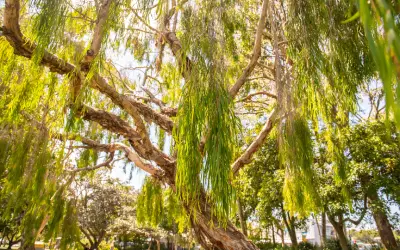
Sometimes a tree’s primary job is simply to be beautiful. These selections are the “jewelry” of the garden, chosen for their flowers, bark, or unusual growth habits.
Crape Myrtle (Lagerstroemia)
Crape Myrtles are perhaps the most popular decorative trees in our area. They offer a “triple threat”: stunning summer flowers, beautiful peeling bark, and vibrant fall color.
- Sun Exposure: Full sun (the more heat, the better the blooms).
- Ideal Soil Type: Adaptable.
- Drought Tolerance: High.
- Seasonality: Summer blooms; deciduous with orange/red fall leaves.
- Where It Thrives: Near driveways, in flower beds, or as a focal point.
- Where Not to Plant: In the shade (they will get powdery mildew).
- Maintenance Needs: Annual pruning to remove spent flowers and “suckers” from the base.
- Maintenance Rating: Medium.
Saucer Magnolia (Magnolia × soulangeana)
Unlike its evergreen cousin, the Saucer Magnolia is a deciduous showstopper. In late winter, before the leaves even appear, the bare branches are covered in massive, cup-shaped pink and white flowers.
- Sun Exposure: Full sun to part shade.
- Ideal Soil Type: Rich, well-drained soil.
- Drought Tolerance: Medium.
- Seasonality: Late winter/early spring bloom.
- Where It Thrives: As a “specimen” tree in the front yard.
- Where Not to Plant: Windy corners where the delicate petals might be blown off prematurely.
- Maintenance Needs: Minimal pruning; mainly keeping it hydrated during heat waves.
- Maintenance Rating: Low.
Peppermint Willow (Agonis flexuosa)
This Australian import has gracefully weeping branches and long, slender leaves that smell like peppermint when crushed. It adds a soft, flowing movement to the garden that contrasts beautifully with more rigid plants.
- Sun Exposure: Full sun to part shade.
- Ideal Soil Type: Well-drained soil.
- Drought Tolerance: Medium to High.
- Seasonality: Evergreen; small white flowers in spring.
- Where It Thrives: Near water features or as a soft screen.
- Where Not to Plant: Frost-prone “low spots” in the yard (it prefers the warmth).
- Maintenance Needs: Light “haircut” pruning to keep the weeping branches off the ground.
- Maintenance Rating: Medium.
What Are the Best Fruit Trees for the San Jose Area?
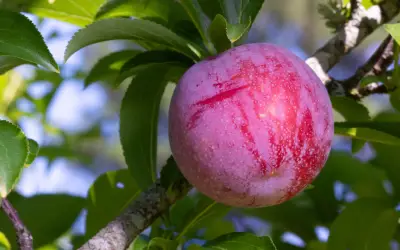
San Jose was built on orchards, and for good reason—our climate is perfect for stone fruits and citrus. Adding a fruit tree allows you to participate in the valley’s agricultural history from your own back porch.
Meyer Lemon (Citrus × meyeri)
Every San Jose CA home should have a Meyer Lemon. They are prolific producers of sweet, thin-skinned lemons and can produce fruit almost year-round.
- Sun Exposure: Full sun.
- Ideal Soil Type: Well-drained, slightly acidic citrus mix.
- Drought Tolerance: Medium (requires regular watering for good fruit).
- Seasonality: Evergreen; flowers and fruits multiple times a year.
- Where It Thrives: Sunny corners or even large pots.
- Where Not to Plant: Dark, cold North-facing walls.
- Maintenance Needs: Regular fertilizing with citrus food and occasional scale/pest monitoring.
- Maintenance Rating: Medium.
“Santa Rosa” Plum (Prunus salicina)
Developed right here in Northern California by Luther Burbank, this plum is perfectly suited to our chill hours and heat. The fruit is sweet, tart, and incredibly juicy.
- Sun Exposure: Full sun.
- Ideal Soil Type: Well-drained loamy soil.
- Drought Tolerance: Medium.
- Seasonality: Spring blossoms; fruit ripens in mid-summer.
- Where It Thrives: In the “orchard” section of a backyard.
- Where Not to Plant: Over decorative patios (dropping fruit is messy).
- Maintenance Needs: Annual “dormant pruning” to encourage fruit production and thinning of fruit.
- Maintenance Rating: High.
Fuyu Persimmon (Diospyros kaki)
The Fuyu is a fantastic “edible landscape” tree. It is beautiful, has no major pest problems, and produces bright orange fruit that stays on the tree even after the leaves fall, looking like living ornaments.
- Sun Exposure: Full sun.
- Ideal Soil Type: Adaptable to most soils.
- Drought Tolerance: High (once established).
- Seasonality: Deciduous; fruit ripens in late fall/winter.
- Where It Thrives: Anywhere you want a beautiful tree that also provides food.
- Where Not to Plant: Areas where you cannot reach the fruit to harvest it.
- Maintenance Needs: Pruning to keep the height manageable for harvesting.
- Maintenance Rating: Low.
Need Help Planting Trees in the San Jose Area? Call Aly’s!
Whether you are looking for a massive oak to shade your home or a compact citrus tree for your patio, there are truly wonderful options for our unique climate. The key to success is matching the right species to your specific goals and ensuring it is planted correctly from day one.
At Aly’s Tree Trimming & Yard Clean Up, we take pride in helping our neighbors select and install the most popular trees in San Jose. We always follow industry best practices when planting trees — from proper hole depth to initial structural pruning—so your new trees have a significant head start on living a healthy and vibrant life.
If you have questions about which tree is right for your yard or need expert help with the planting process, call us today at Aly’s Tree Trimming & Yard Clean Up. We look forward to helping your landscape grow!


